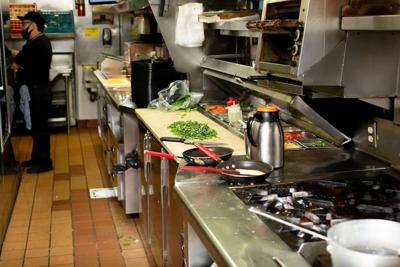


Photo provided by DepositPhotos
Eating out costs more than it did just a few years ago. Federal data helps explain why.
The Bureau of Labor Statistics reports that the Consumer Price Index for food away from home has climbed sharply in recent years, reflecting sustained cost pressure across the restaurant industry. At the same time, wages and utilities have remained elevated, further straining the economy.
For restaurants, which often operate on thin margins, those increases leave little room for error. Rather than relying on one sweeping change, many operators are making a series of smaller adjustments. Most diners will never see them. The balance sheet does.
People are also reading…
Fewer Dishes, Fewer Risks
One of the clearest shifts is menu simplification.
Fewer menu items mean fewer ingredients to buy and store. That reduces spoilage and makes purchasing more predictable. It also shortens prep time and simplifies kitchen workflows, which matters as labor costs rise.
Inventory management has become more disciplined as well. Ordering in smaller, steadier batches allows restaurants to respond to fluctuations in ingredient prices. Bulk buying can reduce per-unit costs, but it increases the risk of waste if demand slows. Operators are recalculating that trade-off with greater care.
The outcome is often a tighter, more focused menu. Customers may interpret it as curation. Behind the scenes, it is cost control.
Subtle Shifts in Portion and Plate
Restaurants are cautious about raising prices outright. Instead, many adjust portion sizes or rebalance ingredients.
Protein, which can be one of the most volatile cost drivers, often receives the closest scrutiny. A slight shift in plate composition or an expanded emphasis on lower-cost ingredients can protect margins without changing the listed price.
These modifications tend to be incremental. A smaller side portion or a different garnish is unlikely to draw attention. Yet multiplied across hundreds of meals a day, those adjustments affect profitability.
Rethinking Labor and Service Models
Labor remains one of the largest expenses in food service. Wage data from the Bureau of Labor Statistics shows sustained increases across hospitality roles, reflecting a competitive hiring environment.
Restaurants have responded by refining staffing structures. Cross-training allows employees to move between front-of-house and back-of-house roles. Some establishments have shifted toward counter service or limited table service to reduce staffing demands during certain hours.
Back-of-house operations are also under review. Dishwashing and cleaning require both labor and water, adding to utility costs. In certain formats, particularly fast-casual concepts, food trucks, outdoor expansions, or temporary setups, operators sometimes rely on portable supplies and bulk disposable tableware to reduce cleaning labor and water usage. Affordable tableware can help control overhead in high-turnover environments where storage and staffing are limited.
These adjustments are not universal. They reflect format-specific choices shaped by space, staffing levels, and customer expectations.
Supplier Strategy and Cost Stability
Procurement has become a central focus.
Restaurants are renegotiating supplier contracts, diversifying vendors, and seeking longer-term agreements to reduce exposure to sudden price spikes. Stabilizing input costs can offer more predictability, even when broader markets fluctuate.
Operators are also scrutinizing non-food expenses more closely. Utilities, packaging, and service supplies may appear modest on their own, but together they influence overall profitability. Close monitoring of these categories has become routine.
The shift is not dramatic. It is cumulative.
A Structural Shift in Dining
The current environment has forced restaurants to evaluate nearly every operational detail. Menu design, staffing models, sourcing strategies, and service formats are all under review. What customers experience as a familiar night out often rests on careful cost modeling behind the scenes.
Some of these changes may persist beyond the present period of elevated prices. Leaner menus and flexible service formats can improve efficiency even when food costs stabilize. The discipline developed under pressure may become standard practice.
Rising food and supply prices have not only reshaped restaurant budgets but are also reshaping the way restaurants operate. That recalibration may define the next chapter of the dining industry.